The Real Cost of Salt Air on SouthCoast Homes
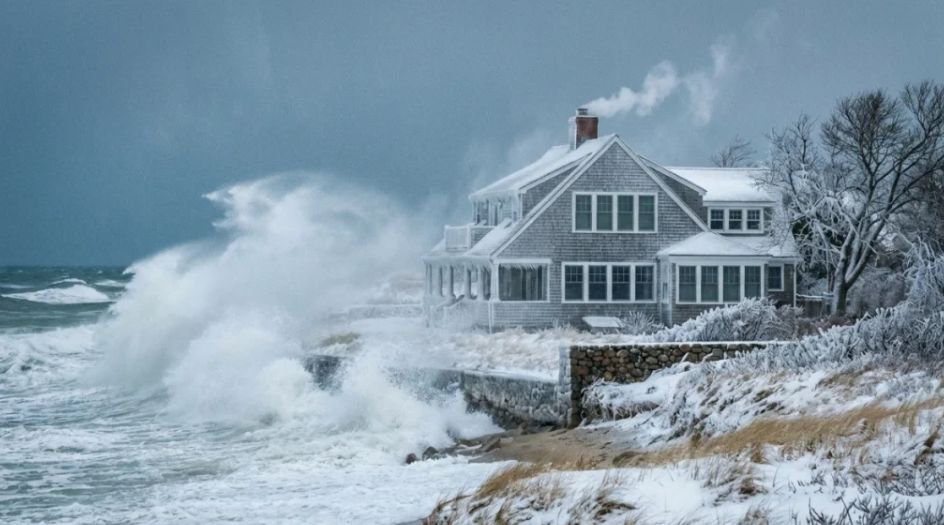
If you live within a few miles of the water in Marion, Mattapoisett, Westport or out on the Cape, your house is in a fight it never fully wins. Salt-laden air is one of the most corrosive everyday environments a building faces, and it works quietly, you don't notice the damage until something you assumed was fine has been failing for years.
Here's the honest read: coastal homes don't get destroyed by one storm. They get worn down on a clock. And the closer you are to open water, the faster the clock runs.
What salt air attacks first
Salt is hygroscopic, it pulls moisture out of the air and holds it against your house. That constant dampness, plus the salt itself, goes after the same parts every time.
Fasteners and metal: the first to go. Nails, screws, hangers, flashing, railings, hinges. Standard steel rusts; rust swells; swelling splits the wood around it. A deck doesn't usually fail at the boards, it fails at the connectors.
Paint and trim: the visible warning. Peeling paint on the seaward side isn't bad paint. It's moisture pushing out from behind. It's the house telling you the envelope is staying wet.
Siding and sheathing: the expensive layer. Once water gets behind siding and stays, sheathing and framing rot from the outside in, and you can't see it until it's structural.
The three moves that slow the clock
You can't change where your house sits. You can change what it's made of and how often you maintain it.
Spec for the coast, not the catalog. Stainless or hot-dipped galvanized fasteners. Marine-grade or coastal-rated hardware. Fiber-cement or properly back-primed siding. PVC or composite trim where it makes sense. The upcharge is small next to a re-side.
Rinse and inspect on a schedule. A twice-a-year freshwater rinse of seaward windows, railings and hardware genuinely extends their life. Walk the exterior each spring and fall and look for the early tells: streaks, peeling, soft spots.
Keep water moving away. Gutters clear, grading sloped away, flashing intact. Salt air plus standing water is the worst combination there is.
Where this breaks
Matching new metal to old. Mixing dissimilar metals near salt speeds up corrosion through galvanic action. A cheap fastener can rot an expensive part.
Painting over the warning. Repainting peeling trim without fixing why it's wet just hides the clock for a season.
Assuming "pressure-treated" means "coastal-proof." It resists rot, not salt corrosion at the fasteners. Different problem.
The bottom line
Salt air is patient. It doesn't announce itself, it just shows up in the repair bill seven years early. The homeowners who win pick coastal-rated materials up front and keep water moving, so the clock runs slow instead of fast.
The ocean is the view. It's also the wear. Build for it, rinse it, and watch the metal.
For exterior work near the water, look for contractors who actually build on the coast, Care Free Homes for roofing and exteriors, custom builders like Long Built Homes in Dartmouth, or compare crews serving Marion, Mattapoisett and Cape Cod. See also: why decks rot faster near the coast.
Find a contractor on the SouthCoast
Browse vetted general contractors serving New Bedford, Dartmouth, Cape Cod and the rest of the South Coast, or list your business.