Why Decks Rot Faster Near the Massachusetts Coast
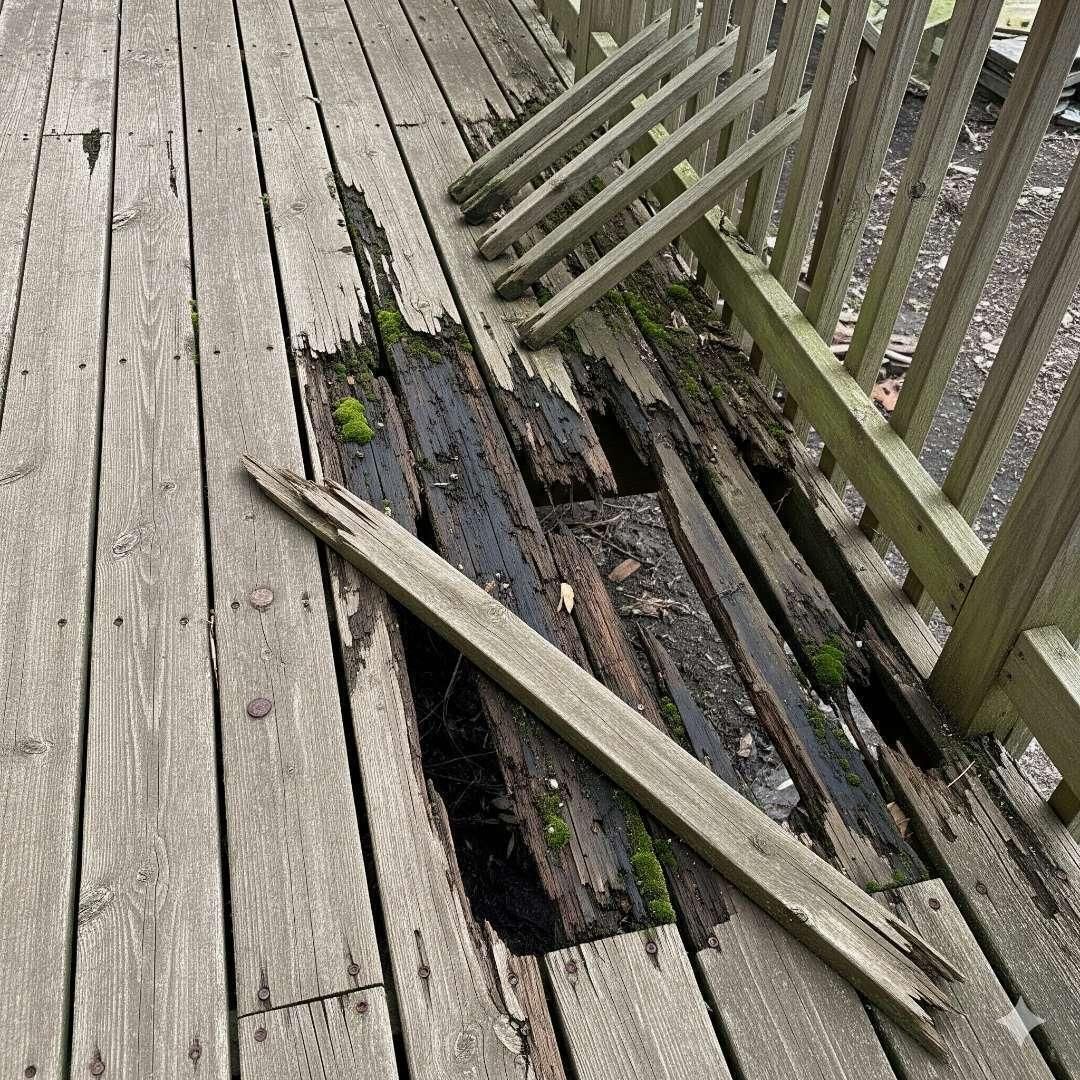
A deck is the most-used and least-inspected structure on most South Coast properties. It sits in sun, rain, salt air and freeze-thaw all year, and we only look at the part we walk on. That's exactly backwards.
National deck guides assume an inland backyard. On the coast the math is different: salt air accelerates corrosion, freeze-thaw works joints loose, and the failures hide where you never look. A coastal deck almost never fails at the boards. It fails at the connections.
Tools you'll need for this job
If you want to do it yourself, here are the tools you'll need:
- Penetrating deck stain & sealer
- Stainless steel deck screws
- Deck cleaner / brightener
- Hidden fastener / flashing tape
As an Amazon Associate, SouthCoast Contractors earns from qualifying purchases.
The three places coastal decks actually fail
The ledger: the dangerous one. The ledger board attaches the deck to the house. If it's nailed instead of bolted, or not flashed properly, water gets behind it and rots both the ledger and the house rim. Ledger failure is the single most common cause of deck collapses. This is the one to check first.
The fasteners: the silent one. Joist hangers, screws and nails near salt water corrode from the inside. The board looks fine; the metal holding it has lost half its strength. Rust also swells and splits the surrounding wood.
The posts and footings: the slow one. Where posts meet concrete or soil, water collects and freeze-thaw heaves the footing. Over a few winters a level deck starts to rack and lean.
The 10-minute coastal deck check
Twice a year, before and after winter, walk your deck and look, don't just glance.
First, grab the railing and push. Any wobble means loose connections, not just a loose rail.
Second, look under the deck at the joist hangers. Orange rust, missing nails, or gaps where the hanger has pulled away are red flags.
Third, check the ledger where the deck meets the house. You want to see bolts and flashing, not nails and caulk.
Fourth, probe a few boards and posts with a screwdriver near the ground and near the house. If it sinks in easily, that's rot.
Where this breaks
Re-staining over rot. A fresh coat makes a failing deck look healthy. Cosmetics don't carry load.
Reusing coastal hardware. If you're rebuilding, old galvanized hangers near salt are already compromised. Go stainless.
Assuming a permit isn't needed. Most South Coast towns require a permit for deck work, especially the ledger and footings. It exists because this is the stuff that hurts people.
The bottom line
The boards are the part you see and the part that matters least. The ledger, the fasteners and the footings carry the load and the risk, and they're exactly where salt air and freeze-thaw do their work.
Walk it twice a year. Push the rail. Look underneath. If anything moves or flakes, get a carpenter who builds coastal decks to look before the next cookout, not after.
Deck and carpentry specialists on the South Coast include Whitla Brothers Builders in Mattapoisett and Fornalski Construction on the Cape; compare more in Dartmouth and Wareham. Related: the real cost of salt air.
Tools & parts for this fix
Protect a coastal deck with:
- Penetrating deck stain & sealer
- Stainless steel deck screws
- Deck cleaner / brightener
- Hidden fastener / flashing tape
As an Amazon Associate, SouthCoast Contractors earns from qualifying purchases. Prices and availability are set by Amazon.
Find a contractor on the SouthCoast
Browse vetted general contractors serving New Bedford, Dartmouth, Cape Cod and the rest of the South Coast, or list your business.