Do You Need a Permit to Build a Deck in Massachusetts? (Yes, Here's Why It Matters)
It's the most common question before a backyard project: do I really need a permit for a deck? In Massachusetts, for almost any deck attached to the house or above a low height, the answer is yes, and the homeowners who skip it usually pay for it later, not sooner.
The reframe: a permit isn't the town getting in your way. It's the inspection that keeps your deck from being the one that collapses, and the paperwork that keeps your home sale from falling apart.
Why the permit exists (and what it checks)
Decks fail more than almost any other residential structure, and when they fail people get hurt. The permit and inspection exist to check the three things DIY deck builds get wrong most often.
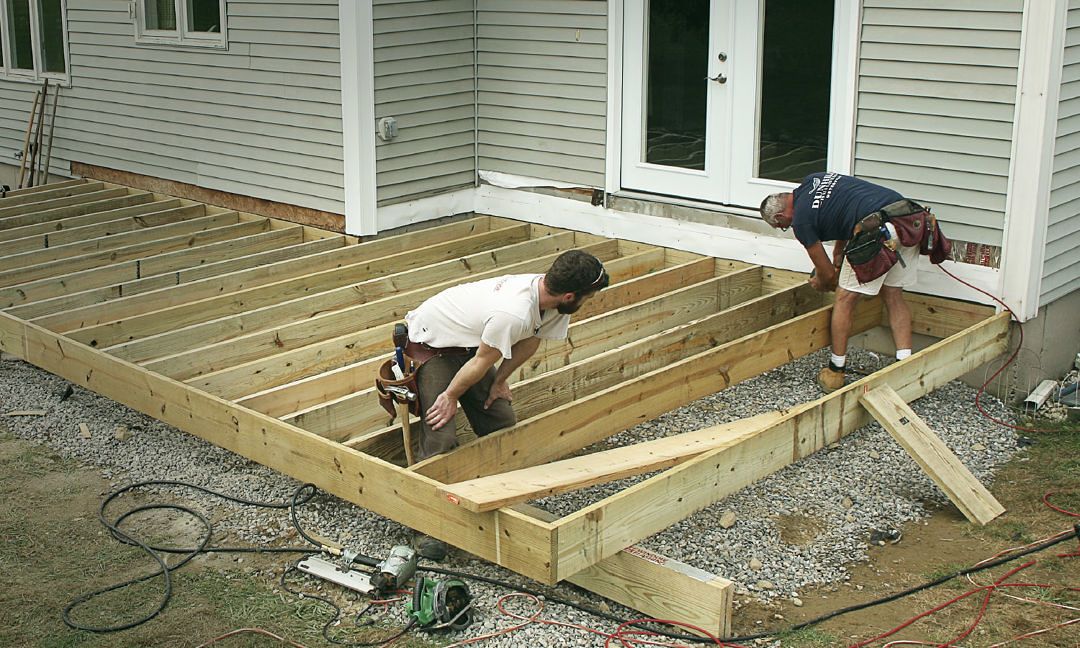
The ledger connection. How the deck attaches to the house, bolted and flashed, not nailed. This is the number-one cause of deck collapses, and it's the first thing an inspector looks at.
The footings. How deep the posts go and how they're supported. In our freeze-thaw climate, footings have to go below the frost line or the deck heaves every winter.
The structure. Joist sizing, spans, railing height and strength, stair construction. The stuff that decides whether the deck holds the people on it.
What the process actually looks like
First, a building permit from your town, usually with a simple plan showing size, materials, footings and the ledger detail.
Second, inspections, typically a footing inspection before concrete and a final inspection when it's done.
Third, the sign-off that becomes part of your home's record. That last part is the one homeowners underestimate.
The refrain: unpermitted work follows you home
An unpermitted deck doesn't just risk safety. It surfaces when you sell. Buyers' inspectors and attorneys flag unpermitted structures, and you can end up tearing out or re-permitting a finished deck under deadline pressure, or knocking money off the sale. The week you saved skipping the permit costs you far more at closing.
Where this breaks
"It's freestanding, so I don't need one." Maybe, maybe not, height and size still trigger requirements in most towns. Call your building department; don't guess.
Hiring a contractor who offers to skip it. That's a red flag about everything else they do. A licensed contractor pulls the permit as a matter of course.
Building to the old code. Deck codes have tightened, especially on ledgers and railings. A deck built to 1995 standards may not pass today.
The bottom line
The permit is cheap, the inspection is fast, and together they're the difference between a deck that's safe and sellable and one that's a liability hiding in your backyard. On the structure people stand on, that's not where to cut a corner.
The permit is a week. The unpermitted deck is a problem you inherit at resale. Pull it, pass it, forget about it.
Deck and carpentry pros pull these permits routinely, compare builders like Whitla Brothers Builders and Fornalski Construction, or browse Mattapoisett and Cape Cod. Related: why decks rot faster near the coast.
Find a contractor on the SouthCoast
Browse vetted general contractors serving New Bedford, Dartmouth, Cape Cod and the rest of the South Coast, or list your business.