Thinking of Opening Up Your Kitchen? Read This First
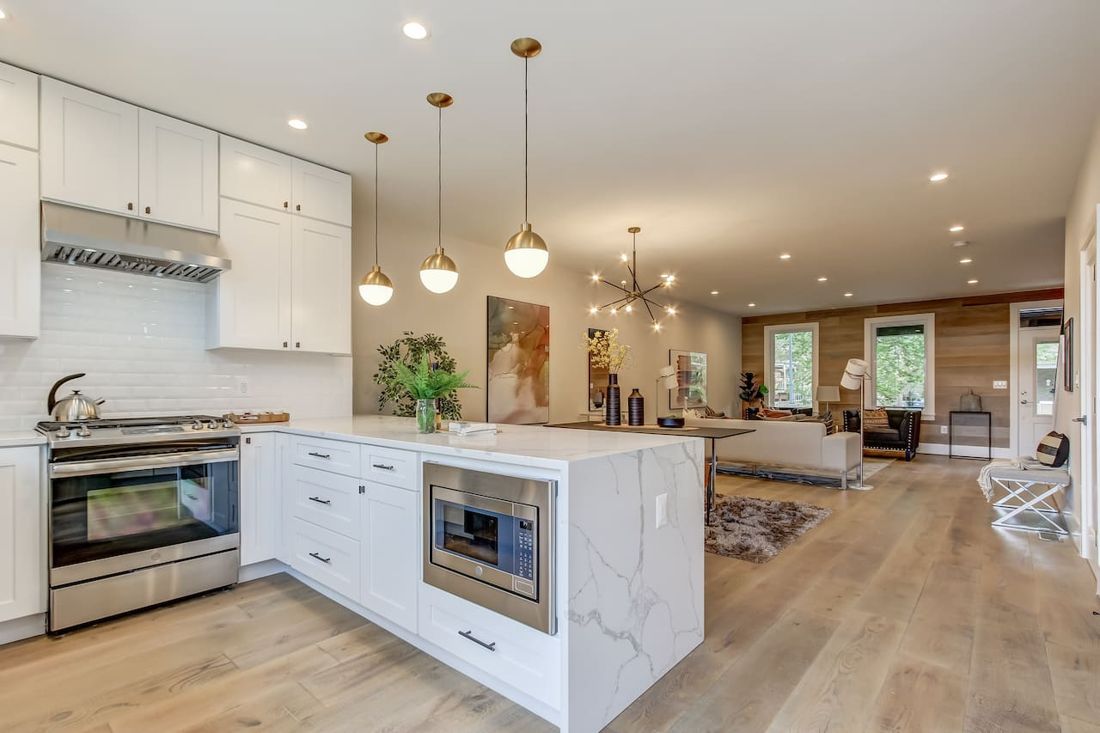
Open-concept is the most-requested renovation for older South Coast homes, and the dream is simple: knock out the wall between the kitchen and the living room and let the light flow. Sometimes it's a clean, satisfying project. Sometimes that wall is the reason the second floor is still up there.
The reframe: removing a wall isn't a demolition job. It's a structural job that happens to start with demolition. The wall comes out in a day. Carrying the load it held is the actual work.
Load-bearing vs. not: why it matters so much
A partition wall just divides space. Take it out, patch the ceiling and floor, done, a reasonable project.
A load-bearing wall carries weight from above, the floor, the roof, sometimes both, down to the foundation. You can still remove it, but the load has to go somewhere, which means a properly sized beam (header) and posts carrying down to adequate support, often a new footing in the basement. That's engineering, a permit, and real money.
In old New England homes, here's the catch: you often can't tell which one it is by looking. Walls were added, removed, and rebuilt over a century. The only reliable answers come from opening it up and, frequently, a structural engineer.
What the real project includes
First, figure out the load, a contractor or engineer determines whether the wall is bearing and what it carries.
Second, size the beam and the path down, the header, the posts, and the support beneath them all the way to the foundation. The load doesn't stop at the ceiling; it has to reach the ground.
Third, permit and temporary support, bearing walls require a permit, and the structure has to be temporarily shored while the beam goes in.
Last, the finish, flush beam or dropped, flooring patched across the old wall line, ceiling and electrical reworked.
The refrain: the load has to land somewhere
Every shortcut on a bearing wall is a bet against gravity. A beam that's undersized, posts that land on a finished floor instead of real support, a "header" that's just a 2x4, these are the DIY moves that show up later as sloping floors, cracked plaster, and sticking doors. The load always has to land somewhere real.
Where this breaks
Assuming it's not load-bearing because it's interior. Plenty of interior walls carry load. Never assume.
Removing it without a permit. Bearing work needs one (and a CSL holder to pull it). Unpermitted structural work is a serious resale problem.
Forgetting the path to the foundation. A beautiful new beam resting on posts that sit on an unsupported floor just moves the problem down a level.
The bottom line
Opening up a kitchen can transform an old home, and it's very doable. But it's a structural project with a permit and a beam, not a demo-day shortcut. Find out what the wall is carrying before you swing anything.
The wall comes down in a day. The load it carried is the whole job. Find out what it's holding before you open it up.
This is firmly contractor territory, start with experienced old-home builders like Cataldo Custom Builders and Long Built Homes, confirm a CSL with this guide, and compare crews in New Bedford and Dartmouth.
Find a contractor on the SouthCoast
Browse vetted general contractors serving New Bedford, Dartmouth, Cape Cod and the rest of the South Coast, or list your business.