
Why Mini-Splits Are Taking Over Older SouthCoast Homes
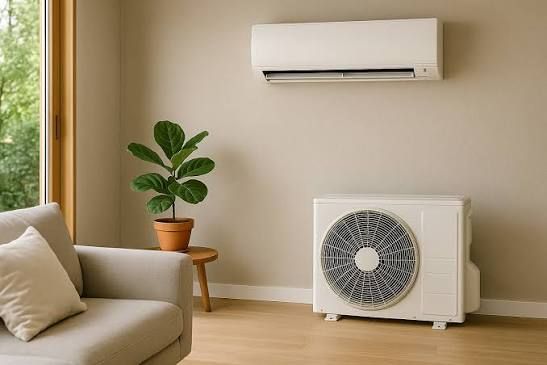
Drive through any older neighborhood in New Bedford, Fairhaven or out on the Cape and you'll start noticing small white units on exterior walls. Ten years ago they were rare. Now they're everywhere. Mini-split heat pumps have quietly become the default upgrade for the region's old housing stock, and there's a clear reason why.
The reframe: for a century, heating and cooling an old New England home meant fighting its bones. Mini-splits stopped fighting them.
Why old SouthCoast homes and mini-splits fit
No ductwork required, the big one. Capes, triple-deckers, mill houses and cottages were built around radiators or never had central air at all. Retrofitting ducts into a finished old home is invasive and expensive. A mini-split needs only a three-inch hole and a small line set. The house keeps its plaster and its character.
Heating and cooling in one. A modern cold-climate heat pump both heats and cools, and today's units keep working efficiently well below freezing, a real change from a decade ago, and the reason they now make sense in a Massachusetts winter.
Room-by-room control. Old homes have rooms that bake and rooms that freeze. Because each indoor head runs independently, you condition the rooms you use and skip the ones you don't, which also helps the bill.
Rebates that move the math. Mass Save and related programs have offered meaningful heat-pump incentives, which is a big part of why adoption took off here. (Programs change, check current offers before you budget.)
Where mini-splits make the most sense
First, a home with no existing ductwork, the classic old South Coast house. This is the slam-dunk case.
Second, an addition or a converted space, a finished attic, a three-season porch, an in-law suite, where extending the existing system is impractical.
Third, a problem room, the bonus room over the garage that's always 10 degrees off. One head fixes it.
Where this breaks
Undersizing or oversizing the units. This is a real engineering job, not a guess. The wrong capacity short-cycles, runs loud, and disappoints. A proper load calculation matters.
Skipping the building envelope. A mini-split in a leaky, uninsulated house works hard and costs more to run. Air-sealing and insulation first make the system smaller and cheaper, the same envelope work that stops ice dams.
Bad placement. Heads and the outdoor unit need thoughtful location for airflow, drainage and looks. A unit slapped on the front of a historic facade is a regret.
The bottom line
Mini-splits won over old South Coast homes because they finally stopped asking a 1920s house to act like a 1990s one. No ducts, heat and cool in one, room-by-room control, and rebates that helped, that's a combination that's hard to argue with for the region's housing stock.
The old house never had ducts. The new system never needed them. Seal the envelope first, size it right, and place it with care.
Mini-split installs usually involve an HVAC specialist plus a contractor for the envelope and finish work, compare general contractors and remodelers serving New Bedford, Fairhaven and Cape Cod in the directory. Related: the hidden costs of a remodel.
Find a contractor on the SouthCoast
Browse vetted general contractors serving New Bedford, Dartmouth, Cape Cod and the rest of the South Coast, or list your business.