
What Nobody Tells You About Installing LVP Flooring
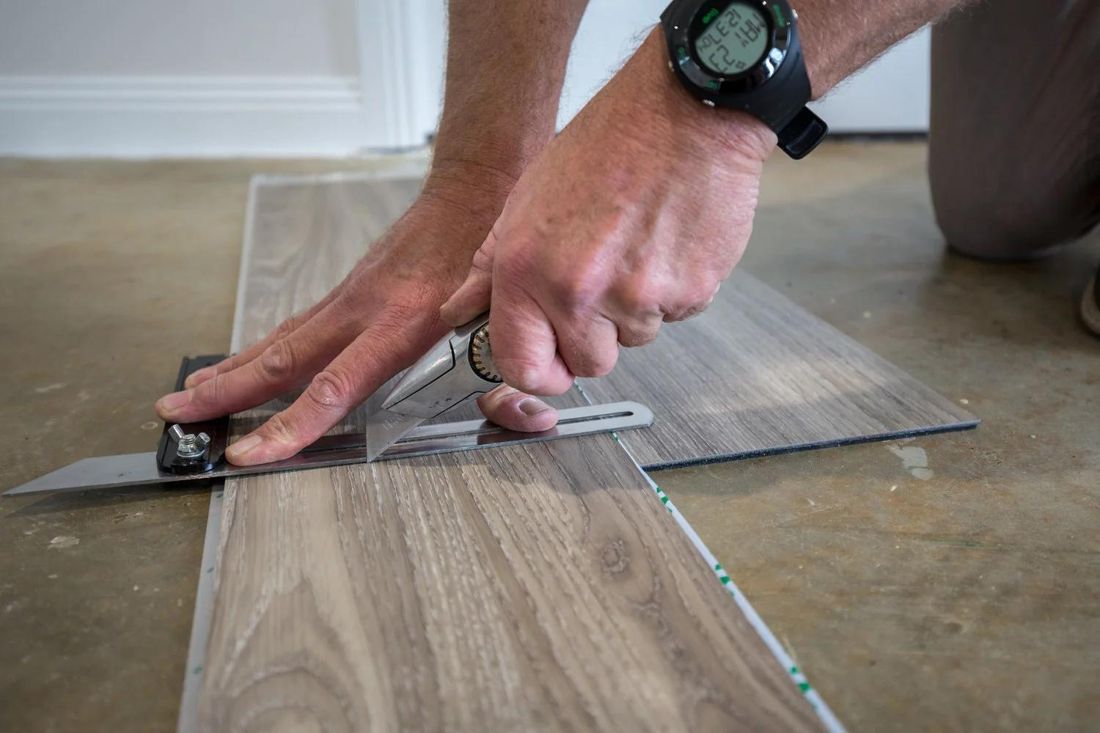
Luxury vinyl plank took over for a reason: it's waterproof, it's affordable, and it clicks together without nails or glue. It's the single most popular DIY flooring project right now, and for a lot of South Coast homeowners it's a genuinely good weekend job. But the difference between a floor that looks professionally installed and one that looks cheap has almost nothing to do with the planks.
The reframe: LVP didn't make flooring easy. It made the clicking easy. The hard part, the part that decides how it looks and how long it lasts, moved to what's underneath.
Tools you'll need for this job
If you want to do it yourself, here are the tools you'll need:
- Luxury vinyl plank flooring
- Flooring underlayment
- Tapping block & pull bar kit
- Flooring spacers
- Heavy-duty utility knife
As an Amazon Associate, SouthCoast Contractors earns from qualifying purchases.
The three things that actually decide the result
The subfloor, flat beats everything. LVP is thin and it floats, so it telegraphs whatever's under it. A subfloor that's out of level or has bumps means planks that flex, click apart, or show every high spot. In old South Coast homes with wavy floors, prep is most of the job. Skip it and the best plank in the store looks bad.
Acclimation and expansion, the gap you can't see. Vinyl expands and contracts with temperature. Planks need to sit in the room a day or two first, and the floor needs a small expansion gap at every wall, hidden under the trim. Forget the gap and a sunny day buckles your floor into a ridge.
The first row, the line everything follows. If the first row isn't straight and square, every row after it drifts, and the gaps at the far wall give it away. Pros spend their time on row one; beginners rush it.
The refrain: the planks are the easy 20%
Clicking planks together is the satisfying part you see in the videos. It's also the part that almost never goes wrong. The 80% that decides success is flat subfloor, proper gap, square start. Respect that and DIY LVP looks great.
Where this breaks
Installing over a bad subfloor to save a day. The single most common regret. Every flaw underneath comes through, and you can't fix it without pulling the new floor.
Tiling, sorry, planking, wall to wall with no gap. Buckling is the result, and it shows up weeks later when you've forgotten the cause.
Going over old tile without checking. You can sometimes float LVP over tile, but loose tiles or deep grout lines telegraph through. Check first.
When to call someone
DIY it if your subfloor is flat and the room is simple. Hire it when the floor is badly out of level (common in pre-1960 homes), when there are lots of cuts around cabinets and odd angles, or when you're tying into stairs and transitions. Those are where a pro's speed and finish pay for themselves.
The bottom line
LVP is one of the best DIY projects in the house, as long as you treat the planks as the last and easiest step. The job is the subfloor, the gap, and the first row. Nail those and it looks like you paid someone.
Anyone can click the planks. The pros earn it underneath. Flat floor, real gap, square start.
For tricky old-home floors or a fast, clean install, compare finish-focused builders like Fornalski Construction and Silva Construction Group, or browse New Bedford and Fairhaven. Related: why floors slope in old homes.
Tools & parts for this fix
Everything a clean LVP install needs:
- Luxury vinyl plank flooring
- Flooring underlayment
- Tapping block & pull bar kit
- Flooring spacers
- Heavy-duty utility knife
As an Amazon Associate, SouthCoast Contractors earns from qualifying purchases. Prices and availability are set by Amazon.
Find a contractor on the SouthCoast
Browse vetted general contractors serving New Bedford, Dartmouth, Cape Cod and the rest of the South Coast, or list your business.