
Why Ice Dams Wreck SouthCoast Roofs, and How to Actually Stop Them
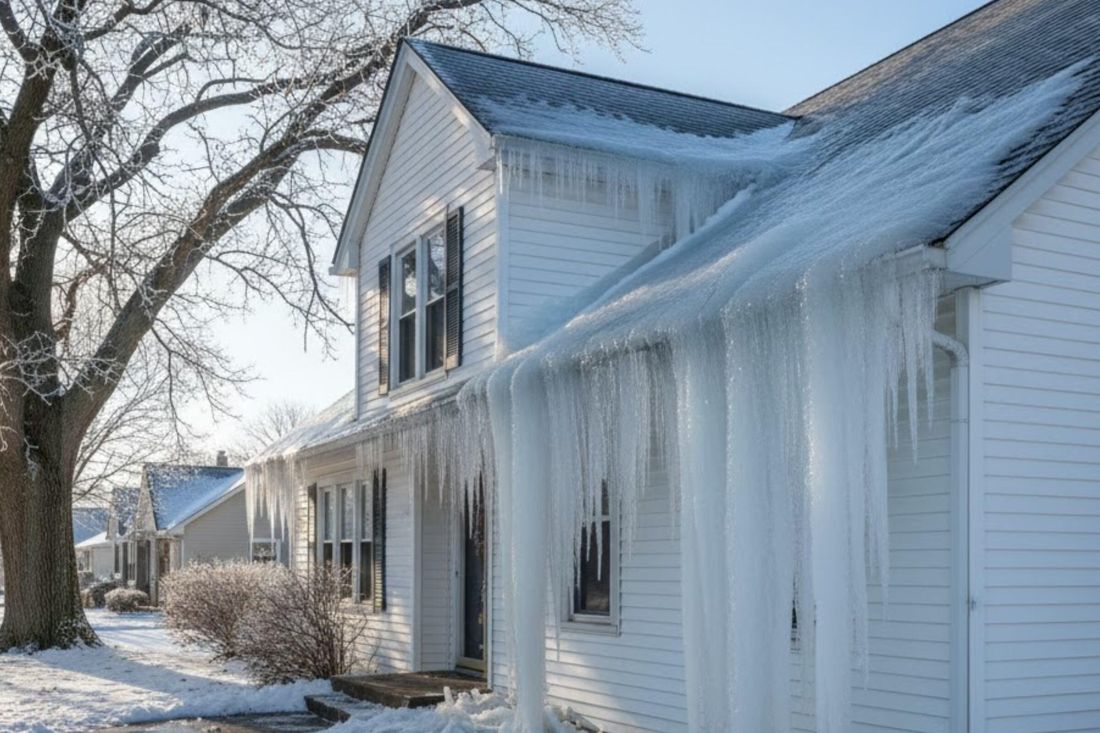
Every February, the same thing happens across New Bedford, Fairhaven and the Cape: a row of icicles forms along the eaves, a brown stain shows up on a bedroom ceiling, and a homeowner calls a roofer. The icicles look like the problem. They aren't.
An ice dam is a ridge of ice that forms at the edge of a roof and stops melting snow from draining. The water backs up under the shingles and finds its way inside. Insurers pay out hundreds of millions for ice-dam damage in the Northeast in a bad winter, and the South Coast's wet, freeze-thaw climate is close to a perfect machine for making them.
Here's the reframe that saves people thousands: the dam doesn't form because of your roof. It forms because of your attic.
Tools you'll need for this job
If you want to do it yourself, here are the tools you'll need:
- Roof rake (telescoping)
- Roof de-icing heat cable
- Roof-safe ice melt (calcium chloride)
- Roof ice-melt socks / pucks
As an Amazon Associate, SouthCoast Contractors earns from qualifying purchases.
The three parts of every ice dam
Stop thinking "roof." Start thinking about three things working together.
Heat loss: the cause. Warm air from your living space leaks into the attic and warms the roof deck. Snow on the warm upper roof melts, runs down to the cold eaves, and refreezes. No escaping heat, no dam.
Air leaks: the fuel. Recessed lights, attic hatches, bath fans, and gaps around plumbing are highways for warm air. In older South Coast homes, and there are a lot of them, these leaks are everywhere.
Ventilation: the release valve. A properly vented attic stays close to outside temperature, so the whole roof melts evenly instead of damming at the edge.
Fix heat loss and you fix ice dams. Everything else is treating symptoms.
The build order that works
Do these in order. Skipping to the bottom is how people waste money.
First, air-seal the attic floor. This is the cheapest, highest-leverage step. Seal the leaks before you add anything.
Second, add insulation to modern levels (R-49 to R-60 in our climate zone). Insulation keeps heat in the house, where you're paying for it, instead of on the roof.
Third, improve ventilation, soffit and ridge venting that lets the roof breathe.
Only last, if the roof itself is old, add an ice-and-water shield membrane the next time it's reshingled. That's a backstop, not a cure.
Where this breaks
Raking snow off the roof every storm. It helps for one day and risks your shingles and your neck. It's a band-aid, not a fix.
Chipping ice with a hammer. You will hit the shingles. People do it every winter and pay for it in spring.
Heat cables left as the only solution. They can buy time on a tricky roofline, but they cost money to run and they don't address the heat loss underneath.
The bottom line
An ice dam is a heat problem wearing an ice costume. The icicles are downstream. The cause is the warm air leaking into your attic, and that's a fixable, mostly one-time job.
The roof is where you see it. The attic is where you solve it. Seal first, insulate second, vent third.
If you're seeing stains or icicles every winter, it's worth having a contractor who knows older New England homes look at the attic, not just the roofline. Exterior and roofing specialists like Care Free Homes in Fairhaven and carpentry-and-roofing crews like Herks Carpentry on the Cape handle this work, and you can compare more across New Bedford and Fairhaven. Related reading: the real cost of salt air on coastal homes.
Tools & parts for this fix
Beat ice dams before they leak:
- Roof rake (telescoping)
- Roof de-icing heat cable
- Roof-safe ice melt (calcium chloride)
- Roof ice-melt socks / pucks
As an Amazon Associate, SouthCoast Contractors earns from qualifying purchases. Prices and availability are set by Amazon.
Find a contractor on the SouthCoast
Browse vetted general contractors serving New Bedford, Dartmouth, Cape Cod and the rest of the South Coast, or list your business.