
Fieldstone Basements: What Every Old SouthCoast Home Is Hiding
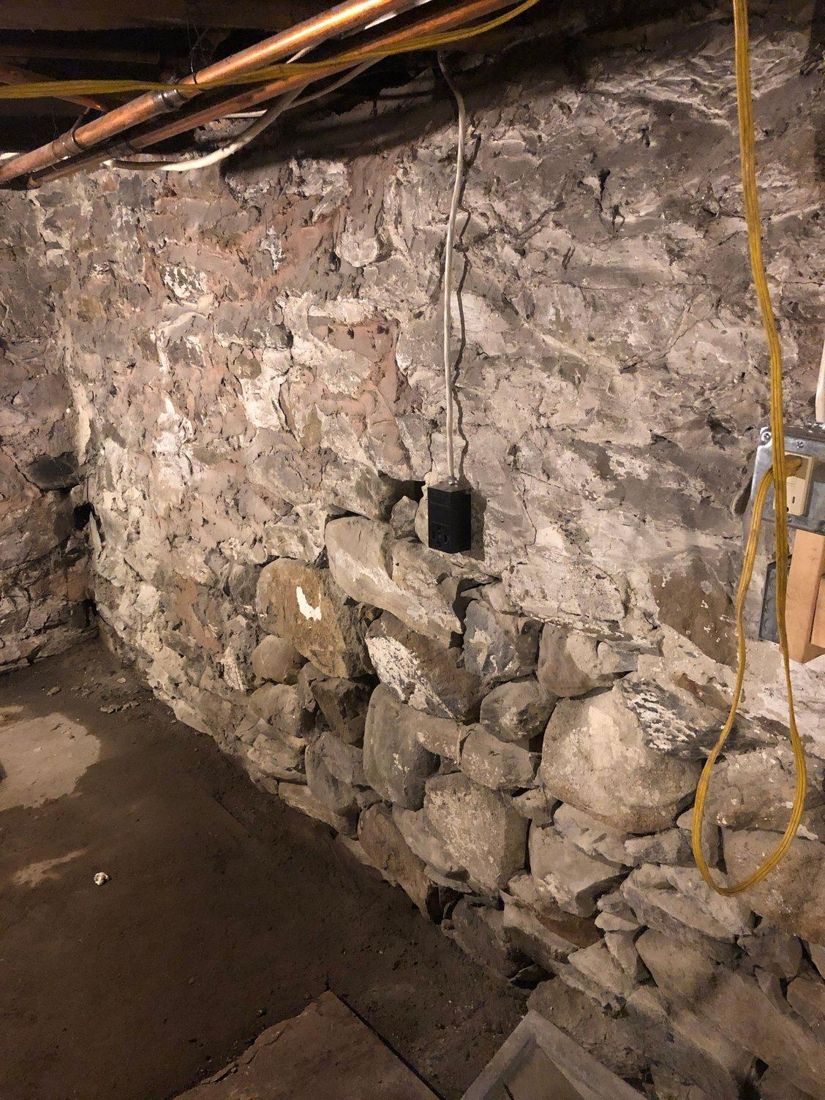
Buy almost any home built before 1940 in New Bedford, Fall River or Fairhaven and you'll meet a fieldstone foundation: stacked stone, often set in lime mortar, sometimes with a dirt or thin-slab floor. To a homeowner used to poured concrete, it looks alarming, damp, crumbly, a little spooky.
Here's the part that changes how you treat it: a fieldstone basement was never meant to be a dry, sealed box. It was built to breathe. Trying to make it behave like a modern basement is how people cause the damage they were trying to prevent.
Normal vs. actually-a-problem
Old stone basements have a baseline of damp that's just... normal. The skill is telling that apart from a real issue.
Normal: a little musty smell, some efflorescence (white powder) on the stone, seasonal humidity, minor dampness after heavy rain that dries out.
A problem: standing water, a high-water-table spring that runs for days, mortar washing out so stones move, active mold growth, or wood framing sitting wet. Those need attention.
The mistake is reacting to the first list as if it were the second.
What actually keeps a stone basement dry
The fix is almost always outside, not a coat of paint inside.
Manage the water before it arrives. Clean gutters, downspouts extended well away from the house, and grading that slopes away. The majority of wet-basement calls trace back to surface water that should have gone elsewhere.
Drainage and a sump where the water table is high. In low-lying spots around Acushnet, Dartmouth and Wareham, an interior perimeter drain to a sump pump is the workhorse solution. It manages water instead of fighting it.
Repoint with the right mortar. This is the one people get wrong. Old stone needs soft, lime-based mortar. Hard modern Portland-cement mortar traps moisture and cracks the stone. Match the mortar to the wall.
Control humidity, don't seal it. A dehumidifier does more good than a bucket of waterproof paint, which often just peels and traps moisture behind it.
Where this breaks
Sealing the walls with waterproof paint. On breathing stone, it traps moisture, pushes it into the mortar, and accelerates decay.
Repointing with hard cement. Looks like a fix, behaves like a trap. Damages the stone over time.
Finishing the basement before solving the water. Framing and drywall against a wet stone wall is a mold factory. Dry it out and keep it dry first.
The bottom line
A fieldstone basement isn't a defect, it's a 100-year-old system that works when you respect how it was built. Manage the water outside, repoint soft, control the humidity, and leave the breathing room alone.
Dry the water you can see. Respect the damp you can't avoid. Don't seal a wall that's supposed to breathe.
For foundation, masonry and drainage work, look for crews experienced with old New England stone, A1 Masonry & Construction in New Bedford and CREATE Building and Landscaping on the Cape handle this kind of work. Compare more in Acushnet and Dartmouth. Related: why floors slope in old New England homes.
Find a contractor on the SouthCoast
Browse vetted general contractors serving New Bedford, Dartmouth, Cape Cod and the rest of the South Coast, or list your business.